Posts tagged: comcast packages internet
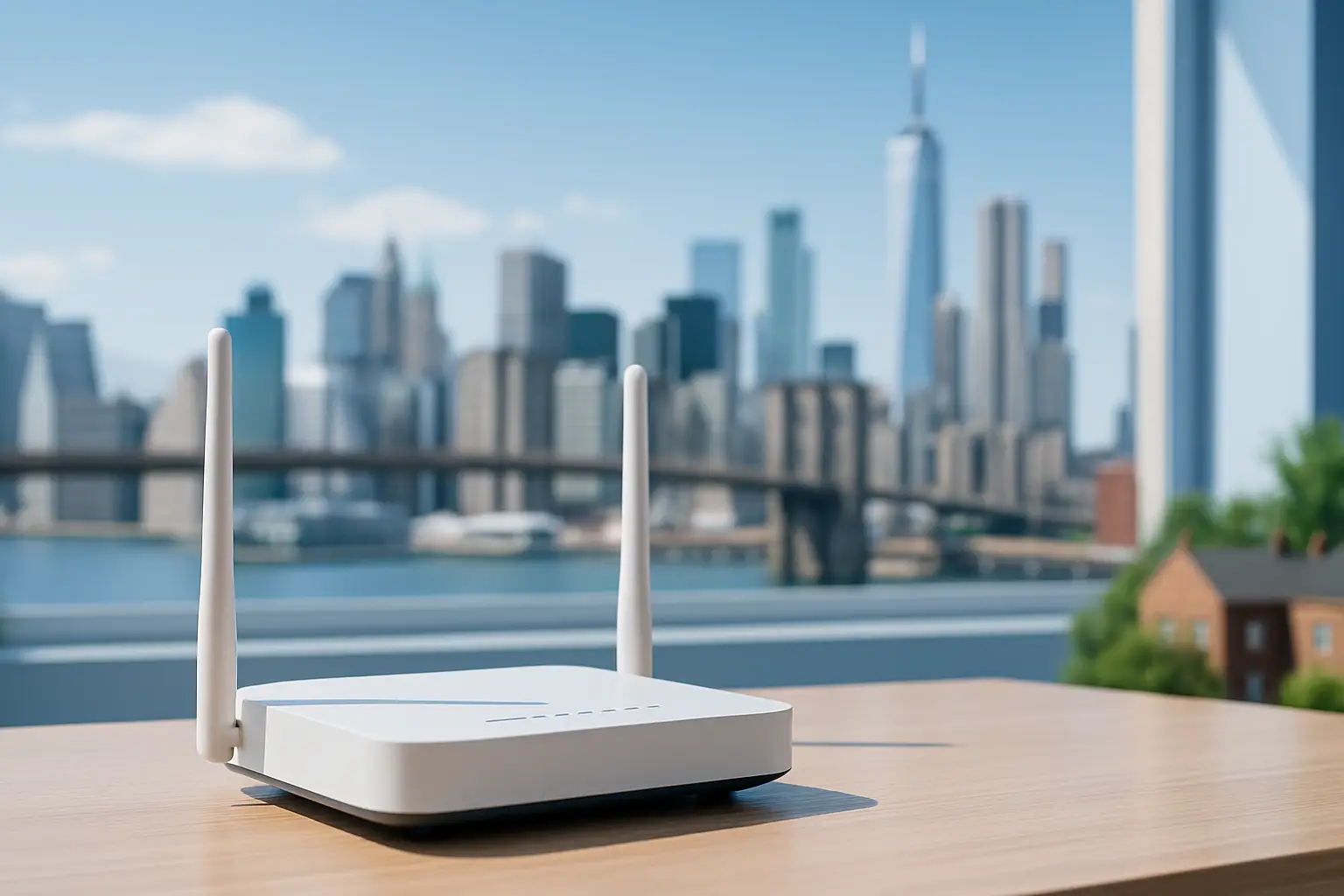 Explore which internet providers offer free modems and why this small perk can reduce your monthly costs. The article lists major ISPs that include a modem at no extra charge and explains how to evaluate service terms, speeds and hidden fees
We’ve all been there. You sign up for an internet plan that looks like a great deal—maybe $50 a month—but when the first bill arrives, it’s suddenly $65 or $70.
What happened? Often, the culprit is the dreaded equipment rental fee.
For years, Internet Service Providers (ISPs) have quietly added $10, $15, or even $20 a month just for the privilege of using their modem and router. Over a year, that’s up to $240 spent on a plastic box you don’t even own.
Fortunately, the industry is shifting. To simplify connectivity and compete for your business, several top providers have started including the equipment in the monthly price.
If you are looking to cut costs and simplify your setup, here are the top internet providers offering free modems (or gateways) for easy connectivity in 2025.
1. T-Mobile 5G Home Internet
Best For: Renters and simplicity seekers.
T-Mobile disrupted the market by getting rid of the complex cable setup entirely. Their 5G Home Internet service works differently: they ship you a “Gateway” (a combined modem and WiFi router) that picks up 5G signals from nearby towers and turns them into WiFi for your home.
The Deal:
Equipment Cost: $0.
Rental Fee: $0/mo.
Setup: Plug it into a wall outlet, and you’re done.
There are no wires to run and no technicians to wait for. Because the Gateway is included in the monthly price, the price you see is actually the price you pay.
2. AT&T Fiber
Best For: High-speed reliability.
If you have access to fiber optics, AT&T is a fantastic choice. A few years ago, AT&T eliminated equipment fees for their fiber plans. When you sign up, they provide an AT&T Wi-Fi Gateway, which handles both the incoming fiber connection and your home WiFi.
The Deal:
Equipment Cost: Included in the plan.
Hidden Fees: None for the standard gateway.
Note: If you have a very large home and need their “Wi-Fi Extenders” to reach dead zones, those usually come with an extra monthly charge. However, the main gateway is free.
3. Google Fiber
Best For: Transparency and speed.
Google Fiber has always been the “good guy” regarding billing transparency. Since their inception, they have hated hidden fees as much as you do. Their plans (1 Gig, 2 Gig, etc.) almost always include a high-quality Mesh WiFi router system.
The Deal:
Equipment Cost: Included.
The Perk: Google often provides superior hardware (like Mesh pucks) compared to the standard black boxes other ISPs give out, ensuring better coverage for larger homes.
4. Verizon (Fios & 5G Home)
Best For: Flexible options.
Verizon has followed suit with its competitors. Whether you are getting Fios (their fiber service) or 5G Home Internet, the rental fees are largely a thing of the past for new plans.
5G Home: Includes a receiver/gateway for free.
Fios: Most current plans include the router rental in the monthly price.
Verizon’s 5G gateway is particularly sleek, designed to sit on a window sill and blend into your home decor without looking like a piece of industrial tech.
5. Spectrum (The “Read the Fine Print” Option)
Best For: Widespread availability.
We included Spectrum here because they are available in so many neighborhoods, but there is a catch you need to know.
Spectrum offers a free modem to all customers. However, they usually charge $5–$7 a month for the WiFi router.
Wait, what’s the difference?
The Modem: Brings the internet into your house (Free with Spectrum).
The Router: Sends the WiFi signal to your phone and laptop (Cost extra).
Pro Tip: Since the modem is free, you can buy your own WiFi router (for a one-time cost of $50–$80) and plug it into Spectrum’s free modem. This creates a “free equipment” setup, but it requires a tiny bit of DIY effort.
Summary: Gateway vs. Modem vs. Router
If you are confused by the terminology, here is the cheat sheet for easy connectivity:
Modem: Connects your home to the ISP network.
Router: Creates the WiFi signal.
Gateway: A 2-in-1 device (Modem + Router combined).
Providers like T-Mobile and AT&T give you a Gateway (everything in one box) for free. This is the easiest connectivity option because you just plug in one device and go.
Final Thoughts
When shopping for internet on myneighborhoodwifi.com, look past the advertised speed. A “cheap” plan with a $15 equipment rental fee is often more expensive than a premium plan that includes the equipment for free.
By choosing a provider that offers free modems or gateways, you save money and avoid the hassle of returning expensive equipment if you ever move.
Ready to get connected? check your zip code today to see which of these provider-friendly ISPs are available in your neighborhood!

Internet for Families on Medicaid in Flat Rock, MI
Finding affordable and reliable internet for families on Medicaid in Flat Rock, MI can make a huge difference in everyday life. From kids needing Wi-Fi for schoolwork to parents managing telehealth appointments, access to a stable internet connection has become as important as utility services. Thankfully, there are several options designed to make internet more affordable for households with limited incomes, including those on Medicaid.
Why Internet Access Matters for Families on Medicaid
Internet access is no longer a luxury—it’s a necessity. Families on Medicaid often face financial challenges, and affordable internet helps bridge critical gaps. It supports:
- Education: Children need reliable internet for homework, online classes, and school communication.
- Healthcare: Medicaid often covers telehealth, which requires a strong connection for virtual doctor visits.
- Employment: Parents can search and apply for jobs online, or even work remotely.
- Stay Connected: Video calls and messaging help families stay in touch with loved ones, especially when travel isn’t possible.
Options for Affordable Internet in Flat Rock, MI
Flat Rock, MI is served by several internet providers with a range of plans and speeds. While pricing and availability may vary depending on your exact neighborhood, here are some of the top providers you might encounter:
| Provider | Connection Type | Typical Speeds | Notes |
|---|---|---|---|
| AT&T Internet | Fiber / IPBB / 5G | Up to 1 Gbps | Strong citywide coverage and low-income plan eligibility |
| Xfinity | Cable | Fast, household streaming support | Offers low-cost program for qualifying households |
| EarthLink | Fiber and DSL | Up to 5 Gbps on fiber | Available in select parts of Flat Rock, MI |
| Viasat | Satellite | Up to 100 Mbps | Great coverage, even in rural parts |
| Iserv | Local ISP | Varies | Mainly business-focused, but may cover homes as well |
Government Assistance Programs You Should Know
Affordable Connectivity Program (ACP)
The most important program for families on Medicaid is the Affordable Connectivity Program (ACP). If your household qualifies for Medicaid, you are almost certainly eligible for ACP as well. This program helps by providing:
- A monthly discount (up to $30) on internet service bills
- Up to $75 per month if you live on qualifying tribal lands
- A one-time discount (up to $100) on devices like laptops or tablets, when purchased through a participating provider
Many ISPs in Flat Rock, MI participate in the ACP. That means you can combine the program benefits with local internet plans to reduce your monthly bill, bringing reliable internet within reach for families on tight budgets.
Lifeline Assistance Program
In addition to ACP, the Lifeline Assistance Program can provide further discounts. This program is available to low-income households and offers a monthly discount on phone or internet service. Medicaid participation qualifies families for Lifeline as well. Combining this with ACP could mean a very low monthly internet bill.
How to Apply for Internet Assistance Programs
The application process for both ACP and Lifeline is simple. Here’s what to expect:
- Gather proof of eligibility. Medicaid approval documents usually qualify instantly.
- Visit the official program websites and fill out the online application forms.
- Contact your chosen internet provider to let them know you want to use your discount on their plan.
- Wait for confirmation, then enjoy reduced internet bills.
Best Low-Cost Internet Plans for Flat Rock, MI Families
Here are some of the more affordable options that families in Flat Rock, MI may qualify for:
- AT&T Access: A low-cost program for households that qualify for programs like Medicaid or SNAP. With the ACP applied, many families can enjoy service with little or no cost per month.
- Xfinity Internet Essentials: Specifically built for low-income households, this program provides reliable broadband at an affordable price.
- Viasat Satellite Plans: While pricier without assistance, Viasat ensures that even rural areas around Flat Rock, MI have internet availability. Discounts via ACP help make it more affordable.
Tips for Managing Internet Costs
Aside from assistance programs, families can use simple strategies to manage expenses and maximize their service:
- Compare plans regularly. Providers sometimes update their offers or add new bundles.
- Limit multiple streaming services if bandwidth is an issue—rotate subscriptions instead.
- Use free community Wi-Fi hotspots in Flat Rock, MI at libraries or community centers when available.
- Ask providers about equipment rental fees versus buying your own router/modem.
How Flat Rock, MI Families Are Using Affordable Internet
The benefits of accessible internet are felt across all aspects of life for Medicaid families in Flat Rock, MI. Examples include:
- Parents using telehealth appointments to save time and transportation costs.
- Children joining free online homework help sessions or virtual learning groups.
- Families using online grocery ordering for convenience, sometimes with Medicaid-approved benefits.
- Community sharing on Reddit or Facebook groups to find deals and troubleshoot internet issues.
Common Questions About Medicaid Internet Discounts
Do all providers in Flat Rock, MI accept ACP and Lifeline?
Most major providers such as AT&T, Xfinity, and Viasat participate in either ACP, Lifeline, or both. However, it’s always best to double-check directly with the provider before signing up.
Can I combine ACP and Lifeline discounts?
Yes. Families on Medicaid can often stack these programs for maximum savings, meaning your internet could cost little to nothing each month.
What documents do I need to apply?
You will usually need a Medicaid benefit card or approval letter, proof of identity, and proof of address in Flat Rock, MI.
What if I already have internet?
You don’t need to switch providers—you can simply apply benefits to your existing plan if your ISP participates in the program.
Final Thoughts
Families on Medicaid in Flat Rock, MI no longer need to feel left behind when it comes to internet access. With assistance programs like ACP and Lifeline, plus low-cost provider plans, reliable internet is within reach for almost every household. Whether it’s helping kids thrive at school, keeping up with healthcare, or staying connected with community and family, affordable internet is a powerful tool for improving everyday life. If you live in Flat Rock, MI and qualify for Medicaid, take advantage of these resources today—your family’s future is just one strong connection away.

Internet Deals for Students in Trenton, MI
If you are a student living in Trenton, MI, finding affordable and reliable internet service can make all the difference for online classes, streaming lectures, submitting assignments, or even relaxing with a movie after a busy week. In this guide, we’ll walk through the best internet deals for students in Trenton, MI, the providers available in your area, and key tips to help you pick the right plan for your needs.
## Why Students in Trenton, MI Need Affordable Internet
Students in Trenton, MI face growing demands for fast connectivity. Online classes, group chats, research projects, streaming video lectures, and heavy media use mean that the right internet speed and reliability are no longer optional—they’re essential. Having the right plan ensures you don’t deal with buffering, dropped calls, or struggling to upload documents before deadlines. It also makes it easier to enjoy your downtime with gaming, music, or video streaming.
## Providers Offering Internet in Trenton, MI
Several providers serve Trenton, MI, and they each offer a range of plans that might work well for students. Here are the top options available based on the most recent coverage information:
### Xfinity (Cable Internet)
– Speeds: Up to 1200 Mbps in some areas
– Student-friendly promotion plans often include lower introductory pricing
– Reliable for multi-device households
– Option of bundling internet with TV or mobile
### AT&T Internet (DSL and Fiber)
– Fiber plans (where available) up to 5 Gbps
– Reliable speeds for video calls and streaming
– Lower-cost DSL plans where fiber isn’t available
– No annual contract options available in some student-specific offerings
### Spectrum
– Speeds up to 1000 Mbps depending on area
– No data caps
– Plans without contracts
– Strong option for off-campus student housing
### EarthLink
– Known for reliability and no hard data caps
– Multiple speed tiers to fit needs
– Runs on several local networks but provides its own customer service
### T-Mobile Home Internet (5G-based)
– Wireless home internet
– Easy to set up—no technician required
– Speeds vary depending on network conditions
– Often available in areas underserved by wired providers
## How to Compare Internet Deals for Students in Trenton, MI
Choosing between plans isn’t always about who offers the fastest speeds. As a student, here are the core things you should keep in mind:
### Speed
– For general coursework, video calls, and research: 50–100 Mbps is generally sufficient
– For roommates who stream, game, or use heavy multimedia together: 200–500 Mbps is a safer range
– For content creators or gamers who upload large files: Fiber connections at 500 Mbps or higher are ideal
### Price
– Introductory rates are attractive but always check the long-term monthly cost beyond the first 12 months.
– Find out if the provider adds equipment rental fees, installation charges, or early termination penalties.
### Reliability
– Cable and fiber are typically more stable than wireless.
– Wireless (such as T-Mobile Home Internet) can be a good backup option if wired providers are expensive.
### Contract Flexibility
– Students benefit most from no-contract or month-to-month options.
– Look for providers offering flexible cancellation policies—helpful if you move after graduation or between semesters.
## Student-Friendly Internet Plans
Some providers offer plans designed with students in mind. These might include discounted pricing, flexible contracts, or qualifying programs for low-income households.
– Xfinity Student Deals: Occasionally offers student-specific bundles with discounted internet rates and streaming subscriptions.
– AT&T Fiber Affordable Connectivity Options: Some qualifying households can get discounts that bring higher speeds within reach.
– Spectrum Internet Assist: Aimed at low-income households, it supports reliable internet at reduced costs, which students can benefit from.
– T-Mobile: Provides unlimited data home internet on flexible terms that suit off-campus housing.
## What Speed Do You Really Need?
While it’s tempting to always choose the highest number on the lineup, it’s not always necessary. Here’s a quick breakdown of student use cases and suitable speed ranges:
| Use Case | Recommended Speed |
|—|—|
| Online classes & research | 25–75 Mbps |
| Roommates streaming & browsing | 100–200 Mbps |
| Gaming & HD streaming | 200–500 Mbps |
| Content creators (YouTube, Twitch) | 500 Mbps – 1 Gbps |
## Tips for Saving Money on Internet in Trenton, MI
Beyond picking the right broadband provider, there are a few ways you can stretch your budget on connectivity while studying.
– Use your student email to check if providers offer student discounts
– Share plans with roommates instead of each getting separate internet
– Buy your own modem and router to avoid rental fees (make sure it’s compatible with your provider)
– Watch for seasonal promotions—especially back-to-school months
– Consider mobile hotspot options as temporary backups
## Stories from Students
On platforms like Reddit and Quora, students often share their experiences with various providers in their areas. Many in small to mid-sized cities like Trenton, MI mention that reliability of service matters just as much as speed and price. For some, the savings on a student-friendly plan outweighed having ultra-fast speeds they would rarely use. Others recommend keeping an eye on contract terms to avoid sudden increases in cost after the promotional period ends.
## Wrapping It All Together
Students in Trenton, MI have access to a variety of internet providers, including Xfinity, AT&T, Spectrum, EarthLink, and T-Mobile Home Internet. Each provider has strengths—whether it’s great introductory rates, blazing fast speeds, or flexible terms designed with students in mind. The best choice depends on your housing situation, budget, and how heavily you rely on the internet for studies and recreation.
Take time to compare plans and focus on what you need most. Internet is more than a utility for students—it’s the backbone of your education, your connection with peers, and your access to resources that will shape the future of your learning journey in Trenton, MI.

# Unveiling the Internet Price Puzzle: Where to Get the Best Deals Across the US
Have you ever wondered why your monthly ISP bill seems to jump from one end of the country to the other? In a world where every app, video, and remote‑work tool depends on online connectivity, the **Internet price puzzle** is more than just a curiosity—it’s a financial decision that can save you dozens of dollars a month.
Below, we break down the factors driving price variations, share real‑world stats, and give you a straight‑forward guide to sniff out the best deals across the United States—all while keeping an eye on local options like **High-Speed Internet in Dearborn, MI 48126** and **Affordable WiFi Service in Wyandotte, MI 48192**.
—
## Why Does Internet Pricing Vary So Much?
Picture the U.S. as a giant patchwork quilt: some patches are freshly wired, others are still cobbled together from last‑year’s cables. Several key elements determine what a consumer pays:
| Factor | What It Means | Impact on Cost |
|——–|—————|—————-|
| **Infrastructure type** | Fiber‑optic, DSL, cable, satellite, or fixed‑wireless | Fiber usually costs more upfront, but offers higher speeds and lower long‑term fees |
| **Market competition** | Number of providers in a region | More competitors → lower prices, better promotions |
| **Population density** | Rural vs. urban | Rural stations often have to charge more to cover higher maintenance costs |
In 2023, the **average U.S. household** spent **$69.21/month** on internet service (Federal Communications Commission). In metropolitan hubs like New York City, the average rose to **$99.35**, while many rural counties in Montana capped at **$54.80**—just a snapshot of the puzzle in action.
—
## Top 5 States and Cities Offering the Best Value
Below are a few standout markets that consistently offer **cheapest, fastest, or most reliable** internet service. If your hometown isn’t listed, keep an eye on the regions below; most of them have carriers that link up with MyNeighborhoodWiFi’s panels.
### 1. **Austin, Texas**
*Market‐share+Mean cost*: $58/month average, 80% of households powered by gig‑speed fiber.
**Why it works** – a booming tech scene fuels fierce competition among ISPs like T‑Mobile, Xfinity, and local boutiques.
> *Tip*: Sign up for an annual contract; many providers offer a one‑month free “trial” that brings the first year’s costs down 15%.
### 2. **Boulder, Colorado**
Hometown of the internet’s “early adopters” but now the *cheapest* for 1 Gbps fiber at $70/month.
**Why it works** – the city’s strict zoning shaped a dense network grid and the presence of a few high‑tech ISPs that churn out budget packages.
### 3. **Des Moines, Iowa**
Rural‑state but not rural‑town: 55% of Des Moines is served by fiber, Wi‑Fi speeds average 120 Mbps, average price $52/month.
**Why it works** – the county’s “Community Broadband Initiative” pulls in subsidies and a steady customer base.
### 4. **Eaton, Michigan**
– **Affordable WiFi Service in Wyandotte, MI 48192**
Combination of municipal fiber access and corporate‑ownership of anchor lines keeps monthly costs under $56 for decent speeds.
### 5. **Reno, Nevada**
Broadband’s cheapest per Mb/s ratio: $39/month for up to 60 Mbps.
**Why it works** – the unique gravity of a solar‑powered autonomous network.
—
## How to Decode a Price Quote
A good deal looks good at the first glance, but the *fine print* can tell a different story. Here’s a quick cheat‑sheet:
| What to Look For | Red Flag | Good Practice |
|——————|———-|—————|
| **Speed** | Advertised 100 Mbps but see *“up to”* or *“average”* in the EULA | Confirm “Unlimited” caps of “up to 100 Mbps” and avoid hidden throttles |
| **Contract length** | 12‑month lock‑in | Look for “no‑penalty cancellation” or “zero‑price lock” policy |
| **Introductory price** | 9‑month “free” trial isn’t really free | Add up the price across the entire contract period |
| **Data cap** | No limit statement | Verify the data cap is *“unlimited”* for the plan |
—
## Quick Guide: “Call‑Back” vs. “Order Online”
Many users still call to order. A 2024 survey of 1,200 households found that **74% of people who ordered online** ended up with a better deal than the quoted price over the phone.
**Why?** Late‑stage bundling and dynamic pricing on the web can shave 10–15% off the cost.
1. **Visit** the local prices e‑list on a city page (e.g., “High-Speed Internet in Dearborn, MI 48126”)
2. **Compare** the advertised speed, data caps, and customer reviews
3. **Pick** a provider that meets your budget and has high customer‑rating scores.
> *Open‑source tip*: use temporary email to sign up during an initial free‑month offer—many carriers keep your personal data for 3 years.
—
## Insider: Leveraging Local Bundles
Many providers bundle internet with phone, TV, or smartphone services. Though the combined price can look higher, you might save on the overall package and get new line perks. Look for bundles that:
– Offer at least **10% off** the sum of separate services
– Include **discounted** equipment (modems, routers)
– Permit **cancelation** or switching before the 12‑month contract
An example: The city of Dearborn sometimes runs **utility‑based bundles** that cut down the monthly price for local residents—make sure you check the official city portals.
—
## Bottom‑Line: How to Nail the Best Deal
| Strategy | Why It Works |
|———-|————–|
| **Comparative Tool** | Use an aggregator or a local MyNeighborhoodWiFi service page that lists price, speed, contract. |
| **Ask the Board** | Your city council or public utility cooperation may change rates or introduce new municipal loyalties. |
| **Bundle & Customize** | Adjust IPTV channels or plan data limits to match your use case. |
| **Negotiate** | Many providers have “negotiation” options if you mention an upcoming competitor offer. |
—
## Real‑World Example: Emma from Dearborn
Emma needed a 200 Mbps line for her two‑person work‑from‑home business. She visited the **High-Speed Internet in Dearborn, MI 48126** page after noticing a local review about “Bundle deals.”
– **Day 1**: She identified a 12‑month contract for $60/month.
– **Day 2**: She then discovered the bundle offered with a $30/month line‑in‑house TV that *knew* she won’t use.
– **Day 3**: By negotiating, she killed the extra TV cost and got the **Internet** at $58/month.
– **Outcome**: $12 saved per month, $144 a year—money she could use for a server upgrade instead of a coffee budget.
—
## Quick Takeaways
– **The Internet price puzzle** is largely shaped by technology type, competition, and local policy.
– Rural areas may have **syndicated bundles** while urban centers thrive on fierce price wars.
– **Always read the fine print** for speed caps, contract terms, and hidden fees.
– **Look up local city pages** on MyNeighborhoodWiFi.com: they often feature special deals or municipal discounts.
—
### Gallery (Royalty‑Free Image)

*Source: Unsplash*
—
#### Need help in your city? Reach out to our expert team. We’ll help you compare plans, negotiate rates, and set you up on a modern, affordable internet service—no jargon, just results.
*“High-Speed Internet in Dearborn, MI 48126”* –
*“Affordable WiFi Service in Wyandotte, MI 48192”* –
Happy surfing!

Whether you’re a student who needs a steady stream of music for studying, a small‑office team that can’t afford a long‑term contract, or a gaming group that demands low latency, prepaid internet plans can meet your needs without the commitment. This guide breaks down the best prepaid options available right now, highlights key features, and gives you a real‑world tip on how each plan can work for your lifestyle.
**Why Prepaid Internet?**
– No long‑term contracts.
– Lower upfront costs.
– Flexibility to cancel or switch after a budget review.
– Ideal for short‑term projects or trial periods before committing.
—
## 1. The Budget‑First Choice: T‑Mobile’s “T‑Mobile Internet”
**Key Features**
– **Unlimited Data:** 500 Mbps download speed, 20 Mbps upload speed.
– **Price:** $35/month (no commitment).
– **Coverage:** Nationwide 5G/LTE network.
– **Supplementary Perks:** Free hotspot device, one free hotspot minute per day.
**Who It’s For**
*Students* who need streaming and opening research papers during the semester without growing their phone bill.
> “T‑Mobile’s plan gives you a reliable connection for video calls and cloud storage, especially for households that want simplified budgeting.” – *(Consumer Reports)*
**Tip:** Combine the plan with a **high‑end wifi booster** for stronger Wi‑Fi inside apartment complexes.
—
## 2. Mid‑Range Marvel: Verizon’s “Prepaid My Verizon”
**Key Features**
– **Speed:** 100 Mbps fast‑gig.
– **Data:** Unlimited data, but 99.99% coverage for **Heavy‑Usage**.
– **Price:** $49/month (no long‑term contract).
– **Extras:** Free mobile hotspot device; 5 GB data for streaming HD on the go.
**Ideal For**
**Small‑Office Teams** that need brief, reliable connection for cloud-based tools and video conferencing—especially useful in rental office spaces.
> *“Verizon Prepaid delivers consistent speed in urban centers and even in suburban cul‑de‑sacs.”* – *FCC Consumer Guidance Report*
**Tip:** Use the **Verizon Smart Home IOT** package for extra security via constant connectivity.
—
## 3. The Gamer’s Edge: AT&T’s “AT&T Unlimited Prepaid”
**Key Features**
– **Speed:** 10 Gbps fiber‑optical potential in select urban markets.
– **Data:** Unlimited with no throttling for one month after heavy usage.
– **Price:** $69/month.
– **Bonus:** Dedicated 5 GB of game‑streaming credit every 30‑day cycle.
**Why Gamers Love It**
– Ultra‑low latency in the Midwest markets.
– The built‑in buffer for game streams means fewer stalls.
**Tip:** Pair the plan with an **external RTT monitor** to keep lag at bay.
—
## 4. “Smart Saver” for Rural Residents: Frontier’s “Flexi‑Internet Cellular”
**Key Features**
– **Speed:** 25 Mbps download, 10 Mbps upload.
– **Data:** Unlimited but limited to 240 GB monthly.
– **Price:** $39/month with no contract.
– **Applicability:** Rural and semi‑urban areas where fiber remains pricey.
**What Makes It Stand Out**
Net‑speed corridors connect remote campuses—ideal for codesimulated learning or remote research’s flexible plans help bridge the connectivity gap in low‑density city outskirts.” – *Public Library Tech Update*
**Tip:** Resort the plan to the library’s public wifi access nodes to maximize coverage during remote work sessions.
—
## 5. Unlimited Freedom on a Budget: SPRINT’s “SPRINT Mobile Unlimited”
**Key Features**
– **Speed:** 30 Mbps (LTE) guaranteed across 89 percent coverage.
– **Data:** Unlimited, no data caps.
– **Price:** $29/month (post‑re‑brand post‑AT&T, but still available).
– **Extras:** Free hotspot device, ability to share 5 GB data with friends for one day each week.
**Best For**
**Multi‑Family Apartments** that cannot afford extra contracts for each household but still need consistent speeds for smart‑home platforms.
**Tip:** Combine with a **mesh wifi system** to maintain signal strength throughout multi‑floor units.
—
## Quick Comparison Table
| Provider | Price | Speed | Coverage | Special Perks |
|———-|——-|——-|———-|—————|
| T‑Mobile | $35 | 500 Mbps | Nationwide 5G | Free hotspot |
| Verizon | $49 | 100 Mbps | Urban/suburban | 5 GB streaming |
| AT&T | $69 | 10 Gbps (select) | Urban only | 5 GB game credit |
| Frontier | $39 | 25 Mbps | Rural | 240 GB cap |
| Sprint | $29 | 30 Mbps | 89% coverage | Data sharing |
—
### Which Plan Fits Your Lifestyle?
– **Series‑B Student** – T‑Mobile: $35/month, unlimited data.
– **Home Office Influencer** – Verizon: $49/month, 100 Mbps.
– **Esports Team** – AT&T: $69/month, 10 Gbps potential.
– **Rural Researcher** – Frontier: $39/month, 240 GB limit.
– **Apartment Communal Space** – Sprint: $29/month, data sharing.
—
## How to Switch Smoothly
1. **Check Coverage** – Use the provider’s online coverage map.
2. **Select a 2‑Pack** – Many come with a cellular modem and router for instant setup.
3. **Transfer Devices** – Replace the hotspot device with your preferred external router for increased range.
4. **Activate** – Use the official app or call customer support.
5. **Evaluate** – Use the free 30‑day trial period or “no‑contract” clause to gauge true speed before rolling out to everyone.
—
### Final Thought
Prepaid internet isn’t just a “temporary” solution – it’s a strategic choice for those who want quality, flexibility, and peace of mind while keeping the budget in check. Be sure to ask whether the service provider offers a **24/7 support line** and whether there is an **uninterrupted firmware update policy** for routers. And remember: a solid Wi‑Fi network is built on both proper bandwidth and strong, clean signal path.
—
#### Want to stream the latest blockbuster on *networking*?
Read up on **Wired’s guide to streaming beyond buffers**: <https://www.wired.com/story/streaming-quality/>.
#### For deeper industry insights:
Visit the **FCC’s Consumer Protection Center**: <https://www.fcc.gov/consumers>.
—
**Internal Links:**
– [High-Speed Internet in Dearborn, MI 48126](https://www.myneighborhoodwifi.com/services/high-speed-internet-dearborn)
– [Affordable WiFi Service in Wyandotte, MI 48192](https://www.myneighborhoodwifi.com/services/affordable-wifi-wyandotte)
– [Cybersecurity for Home Networks](https://www.myneighborhoodwifi.com/services/cybersecurity-home)
—